Choose an appointment the child can actually complete
A detailed reference photo may be beautiful and still be the wrong appointment for a particular child. Consider age, previous hairstyling experience, tenderness, hair density and how long the child can sit while awake, calm and cooperative. A simpler style completed comfortably is a better outcome than an elaborate plan that becomes distressing halfway through.
For a first appointment, fewer or larger sections, a shorter finished length or a simpler cornrow design may be a sensible introduction. Detail can increase later when the child knows what the process feels like.
Prepare with the child, not around the child
Explain who is coming, where everyone will sit and that the appointment will take time. Avoid saying ‘it won’t hurt’ because detangling and parting can sometimes feel uncomfortable. A more useful promise is that the child can speak up, ask for a pause and expect the adults to listen.
Let the child make one or two age-appropriate choices, such as bead colour or one of two approved styles. Too many choices at appointment time can create pressure and delay.
Make wash day part of the comfort plan
Follow the preparation instructions for the booked service. When hair should be washed and detangled beforehand, use conditioner and work gently from the ends upward with a wide-tooth comb. Rushing through knots immediately before the stylist arrives can leave the scalp tender before the appointment has even started.
The American Academy of Dermatology recommends gentle detangling and loose braids for children. If the scalp is irritated, has sores or shows unusual hair loss, postpone cosmetic styling and seek appropriate professional advice.
Build a small comfort kit
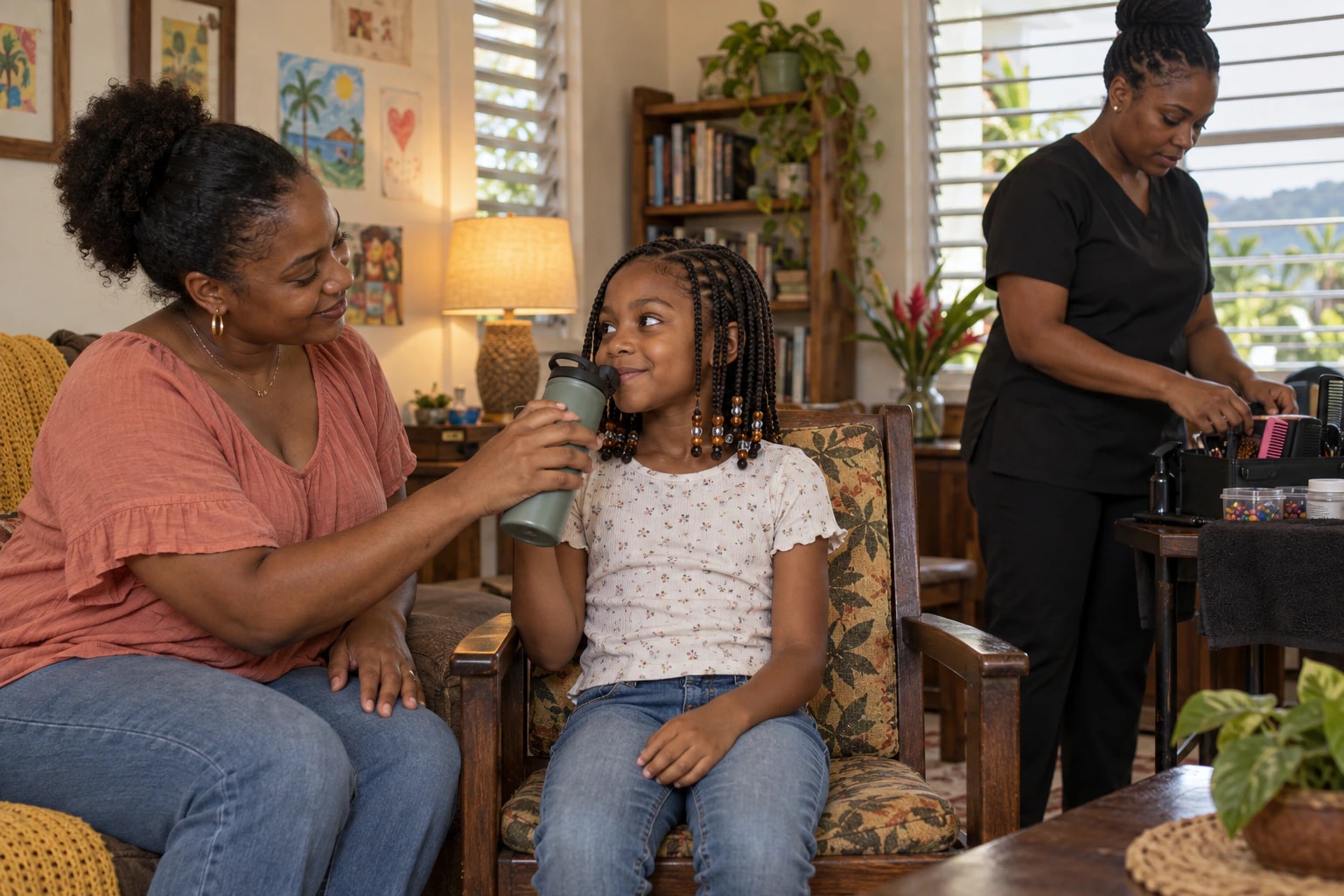
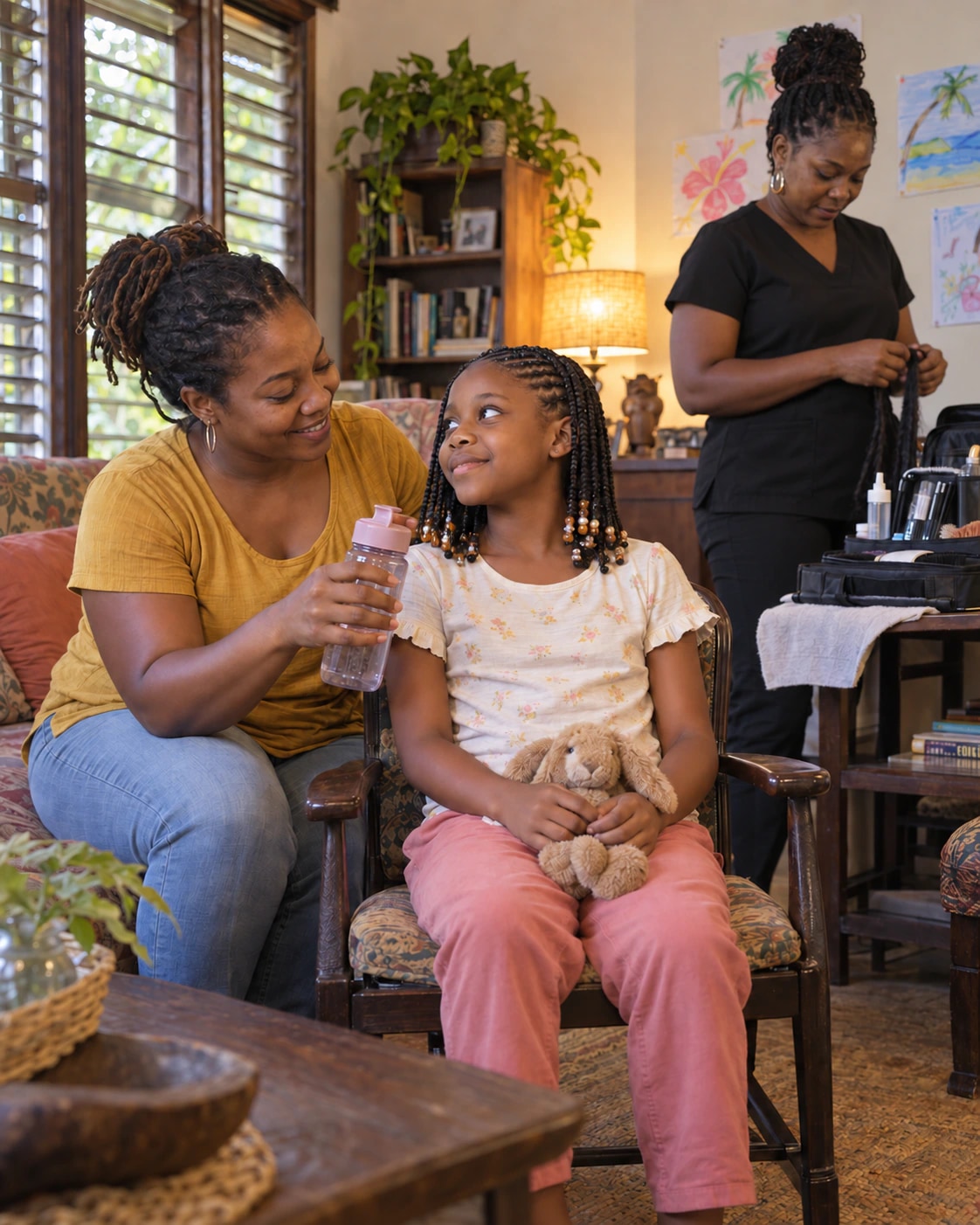
Choose entertainment that works without the child constantly turning their head. Download a film or episodes in advance, use headphones that do not interfere with the style, and keep the device at eye level. Bring water and a non-messy snack, and plan bathroom breaks before detailed sections begin.
- A favourite programme downloaded before the appointment
- Headphones that can sit away from the working area
- Water and a simple snack
- A small comfort item for younger children
- A parent who can stay nearby without directing every movement
Use the comfort traffic light
Green means the child is relaxed, talking normally and able to follow simple instructions. Yellow means repeated squirming, rubbing the scalp, becoming unusually quiet or asking when it will end; that is the moment for a short break or a simpler plan. Red means pain, crying that does not settle, stinging, visible pulling or panic. Stop and address the cause.
Dermatologists are direct about tight styles: if it hurts, the style is too tight. Children can experience traction-related damage too. Comfort is part of the quality of the finished style, not something separate from it.
Keep the first night simple
Show the child how the style will be protected at night without pulling it tightly. Check the hairline and scalp in good light. If discomfort continues, do not wait several days hoping it disappears. Contact the stylist about an adjustment or remove the source of tension when appropriate.
Praise the child for communicating and taking breaks, not only for sitting still. That makes the next healthy hair appointment easier to approach honestly.
Research and further reading
Research and further reading
These sources informed the practical recommendations in this guide.